


Group Profile
- Group Name: Girls' Generation (소녀시대)
- Debut: August 5, 2007
- Current state: Active
- Years Active: 2007–present (19 years)
- Entertainment Company: SM Entertainment
- Fandom: SONE (S♥NE)
- Group Color: Pastel Rose Pink
- Members: Taeyeon, Sunny, Tiffany, Hyoyeon, Yuri, Sooyoung, Yoona, Seohyun
- Oldest Member: Taeyeon
- Youngest Member: Seohyun
- Most Popular Member: Taeyeon, Yoona
- Notable Albums: Girls' Generation (2007), Oh!, The Boys, I Got a Boy, Lion Heart, Holiday Night, Forever 1
- Country: South Korea

- Generation: A 2nd Generation K-pop group
- Leader: Taeyeon
Girls’ Generation (소녀시대), also known as SNSD, is a prominent South Korean girl group. Managed by SM Entertainment, the group debuted on August 5, 2007, in South Korea.
The group currently consists of eight members: Taeyeon, Sunny, Tiffany, Hyoyeon, Yuri, Sooyoung, Yoona, and Seohyun. Seven members are South Korean, while Tiffany (born Stephanie Young Hwang) is an American of Korean descent. The group originally debuted with nine members; Jessica left the group in September 2014.
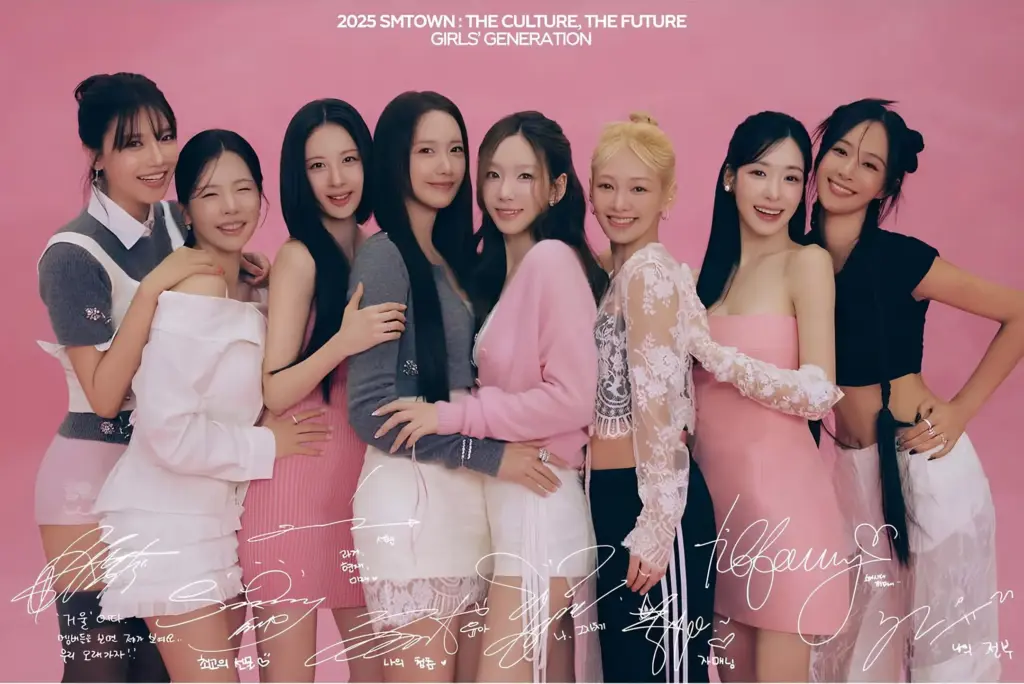
Girls’ Generation is recognized as one of the leading groups of the second-generation Hallyu wave and played a role in the international expansion of K-pop.
Meaning of Girls’ Generation
The Korean name of the group, Sonyeo Sidae (소녀시대), translates to “Girls’ Generation” or “The Era of Maidens.” The English name Girls’ Generation is a direct reflection of this meaning.
The name is written in Hanja as 少女時代, which has similar readings across several East Asian languages. In Japan, the group uses the name Shōjo Jidai, which also means “The Era of Girls.”
Fandom & lightstick
The fandom of Girls’ Generation is named SONE, often stylized as S♥NE. The name is pronounced in Korean as “So-won” (소원), meaning “wish.” The spelling is also interpreted as “So One,” symbolizing the connection between the group and the fans.
The official fandom color is pastel rose, a light pink hue used during fan cheering and group events.
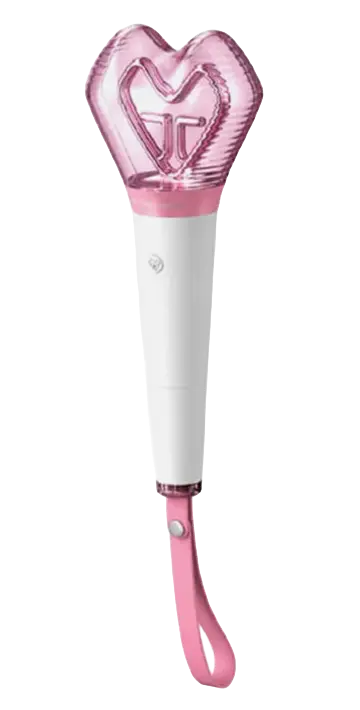
In October 2018, the official lightstick of Girls’ Generation was released, approximately 11 years after the group’s debut. The lightstick emits pastel rose-colored light and incorporates the group’s “GG” logo in the button design. The product set includes the lightstick, a hand strap, and a case. Within the fan community, the lightstick is frequently referred to by the nickname “Molar Bong” due to its shape, which resembles a molar tooth from certain angles.
Popularity
Girls’ Generation has influence in South Korea, Japan, and various international markets. In South Korea, the media frequently refers to the group as the “Nation’s Girl Group” (국민 걸그룹).
In Japan, Girls’ Generation was the first non-Japanese girl group to have three albums reach number one on the Oricon Albums Chart. The group’s three concert tours in Japan attracted a total of approximately 550,000 spectators.
Between 2009 and 2011, the group generated approximately 68.8 billion won in revenue, making Girls’ Generation the highest-earning artist for SM Entertainment during that period.
In 2011, Forbes Korea Power Celebrity 40 ranked Girls’ Generation at number one, a position they also held in 2012 and 2014. Gallup Korea surveys identified the group as the most popular singer in South Korea for three consecutive years starting in 2009.
In 2025, the group’s official Spotify account reached over 2.6 million followers and exceeded 1.1 billion cumulative streams.
In 2007, the debut song “Into the New World” was released and was subsequently adopted in various social movements and protests in South Korea. In 2009, the track “Gee” was later ranked by Rolling Stone as the greatest K-pop song of all time.
In 2018, Guinness World Records recognized Girls’ Generation as the artist with the most awards won at the Melon Music Awards, totaling 13 awards.
Awards
- In 2007, Girls’ Generation achieved their first music program win with “Into the New World” on M! Countdown on October 11. The group also received the Popularity Award and Rookie Award at the Golden Disc Awards.
- In 2008, the group received the Best Female Group award at the Korean Entertainment Arts Awards. At the Seoul Music Awards, they were awarded the Best Newcomer Award and the High1 Music Award.
- In 2009, the group received Artist of the Year and Song of the Year for “Gee” at the Melon Music Awards.
- In 2010, Girls’ Generation received the Digital Daesang for “Gee” at the Golden Disc Awards. At the Seoul Music Awards, they received the Daesang and the Digital Music Award. The Korean Music Awards named “Gee” the Song of the Year.
- In 2011, the group received the Disk Daesang for the album Oh! at the Golden Disc Awards. At the Seoul Music Awards, they received the Daesang, Bonsang, Popularity Award, and Hallyu Special Award. At the Japan Gold Disc Awards, they were named New Artist of the Year and one of the Best 5 New Artists.
- In 2012, Girls’ Generation received the Digital Daesang for “The Boys” at the Golden Disc Awards. At MAMA, the group received Best Female Group and Artist of the Year. The South Korean government presented the group with the Prime Minister’s Commendation. At the Japan Gold Disc Awards, they received Album of the Year (Asia) and Best 3 Albums (Asia) for the album Girls’ Generation.
- In 2013, the group received Video of the Year for “I Got a Boy” at the YouTube Music Awards. They were also named Best Female Group at MAMA.
- In 2014, the group received Best 3 Albums (Asia) for Girls & Peace and Love & Peace at the Japan Gold Disc Awards.
- In 2015, Girls’ Generation was named Best Female Group at MAMA. At the Japan Gold Disc Awards, “Indestructible” received Song of the Year by Download (Asia).
- In 2017, Billboard ranked Girls’ Generation at the top of the “Top 10 K-pop Girl Groups of the Past Decade” list.
- In 2024, a Gallup Korea survey ranked Girls’ Generation in a tie for first place with Blackpink as the most popular K-pop girl groups to debut in the 21st century.
Musical style
Girls’ Generation’s music primarily spans bubblegum pop, dance-pop, and electropop, while incorporating elements of hip-hop, R&B, and EDM.
“Gee” (2009) and “Oh!” (2010) used bright concepts featuring pastel-colored outfits and synchronized choreography. In 2009, “Genie” was promoted with an image based on naval uniforms. In 2010, “Run Devil Run” adopted a dark pop concept.
In 2011, “The Boys” combined pop and hip-hop elements and was released in an English version for the international market. In 2013, “I Got a Boy” integrated multiple musical elements within a single track featuring a segmented structure.
In 2015, “Lion Heart” utilized a retro style inspired by 1960s and 1970s music. In 2022, the 15th-anniversary album Forever 1 returned to a bright pop style similar to the group’s early musical direction.